SPAN XFRA Explained: What Contractors and Homeowners Should Know
The rapid growth of artificial intelligence is creating demand for more computing power, but building traditional data centers requires much more than servers. Developers also need land, cooling infrastructure, utility capacity and grid connections that can take years to secure.
SPAN believes part of that infrastructure could instead be distributed across homes and small commercial properties.
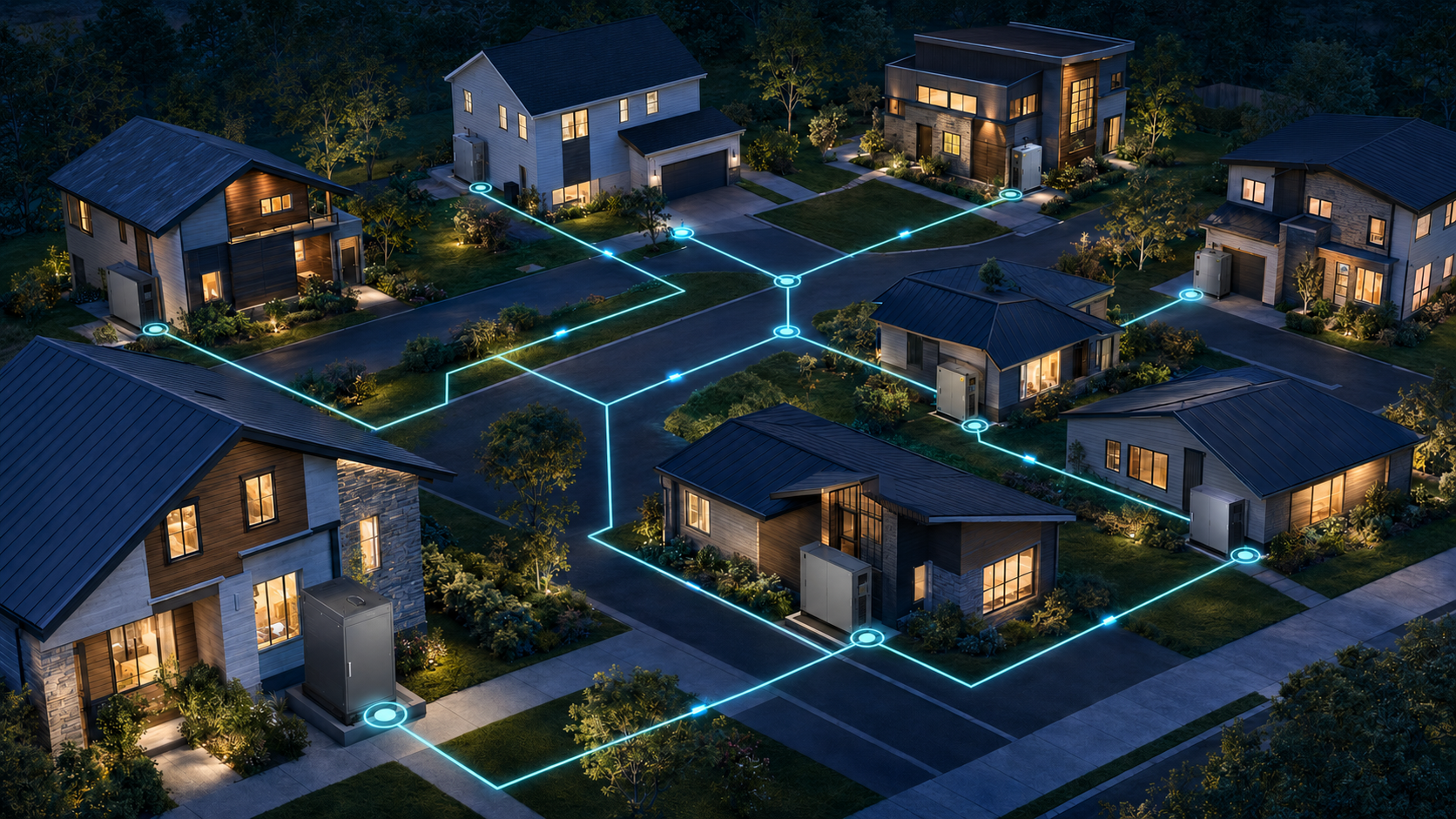
Announced in April 2026, SPAN XFRA combines an outdoor computing node with a SPAN smart electrical panel, battery storage, fiber connectivity and centralized cloud management. The concept could create a new type of residential infrastructure project—and a potential future opportunity for electrical contractors, homebuilders and other skilled trades.
However, contractors should treat XFRA as an emerging market rather than a service they can begin selling today.
Independent editorial note: Contractor Capital is not affiliated with, sponsored by or endorsed by SPAN, XFRA, NVIDIA or PulteGroup. This article provides independent educational analysis based on publicly available information.
Key Takeaways
- XFRA introduces a distributed data-center model that connects smaller computing nodes across homes and small businesses.
- SPAN is launching the concept through a 100-home new-construction proof of concept in the United States.
- The initial rollout is being coordinated directly with residential builders, with broader consumer access anticipated as the program develops.
- SPAN is expected to provide more information about XFRA installer qualifications, training and service requirements as the program moves beyond the proof-of-concept stage.
- Contractors can begin positioning themselves by expanding their expertise in smart panels, battery storage, load management and home electrification.
- SPAN is targeting broader expansion in 2027, giving contractors time to strengthen relevant capabilities while monitoring confirmed availability, installer eligibility and local demand.
What Is SPAN XFRA?
SPAN XFRA is a distributed data center system designed to use underutilized electrical capacity at homes and small commercial properties. Instead of concentrating every server inside one large facility, XFRA coordinates multiple smaller computing nodes as part of a larger cloud network.
The system is primarily designed for AI inference—the process of using a trained AI model to answer questions, recognize images, generate content or perform other tasks. This differs from AI training, which involves building the underlying model and typically requires enormous clusters of specialized computing hardware.
SPAN says XFRA is intended to supplement traditional data centers, not replace them. Its proposed advantage is the ability to place computing capacity closer to end users while using existing electrical infrastructure rather than waiting for entirely new utility connections.
How Does an XFRA Node Work at a Home?
The announced XFRA system has four principal components.
The XFRA Node
According to the official XFRA specifications, each outdoor node is designed to contain:
- 16 NVIDIA RTX PRO 6000 Blackwell Server Edition GPUs
- Four AMD EPYC CPUs
- Three terabytes of memory
- Fiber networking
- A 35,000-BTU heat pump providing liquid cooling
- A stated operating level of approximately 60 decibels
- A 15-kWh battery supporting the node and providing home backup
These are SPAN’s published design specifications, not independently tested findings from Contractor Capital.
The SPAN Smart Electrical Panel
Residential electrical service is designed to handle periods of unusually high demand, even though a home may use considerably less power most of the time.
The SPAN Panel monitors household circuits and available electrical capacity. SPAN says its controls allow an XFRA Node to use available capacity while the panel continues monitoring the home and maintaining applicable operating limits.
This load-management capability is central to the idea. Simply connecting high-performance computing equipment to a home without actively coordinating its demand could overload the available service.
Battery Storage and Backup Power
The announced system includes a 15-kWh battery designed to protect computing workloads during outages and buffer short-term changes in demand. SPAN also says the battery can provide backup power to the host home.
Homeowners would still need to understand which household circuits receive priority, how much backup duration to expect and whether the node retains access to part of the battery during an outage.
The XFRA Cloud
Individual nodes would be coordinated through what SPAN calls the XFRA Secure Orchestration Layer. This system is intended to make geographically separated nodes function as one computing fleet and assign workloads based on available capacity and proximity to users.
XFRA Versus a Traditional Data Center
Location
XFRA distributes equipment across homes and smaller properties. Traditional data centers concentrate equipment within purpose-built facilities.
Power strategy
XFRA is designed to use available capacity within existing electrical infrastructure. A large data center generally requires dedicated utility service, substations and significant grid interconnection work.
Deployment model
XFRA capacity could be added incrementally through individual nodes. Traditional projects normally require substantial construction before the facility begins operating.
Primary role
XFRA is being positioned primarily for distributed AI inference, cloud gaming and other latency-sensitive workloads. Centralized data centers handle a broader combination of AI training, inference, storage and cloud services.
Homeowner involvement
A participating homeowner would host physical infrastructure on the property. Homeowners are not directly involved in conventional data-center operations.
Why Is AI Creating a “Speed-to-Power” Gap?
Technology companies may be able to purchase computing equipment faster than utilities can provide the power needed to operate it.
The scale of the challenge is significant. The U.S. Department of Energy’s Lawrence Berkeley National Laboratory estimated that data centers consumed approximately 176 terawatt-hours of electricity in 2023—about 4.4% of total U.S. electricity consumption.
The laboratory projects that data-center electricity use could reach 325–580 terawatt-hours in 2028, representing approximately 6.7%–12% of projected U.S. electricity consumption.
XFRA’s proposed solution is to find usable electrical capacity within infrastructure that already exists. Whether this model can operate reliably, economically and at scale will depend on the results of its initial deployments.
What Could Homeowners Receive From Hosting an XFRA Node?
Under SPAN’s announced host model, eligible households may receive:
- A SPAN smart electrical panel
- A battery-backup system
- Home energy monitoring and management
- High-speed internet
- Fixed, discounted electricity and internet rates
- Optional solar integration
- Greater resilience during certain power outages
These are proposed host benefits, not guaranteed benefits available to every homeowner. SPAN says it is currently working directly with U.S. residential builders on its first 100-home proof of concept and plans broader expansion in 2027.
Individual homeowners cannot presently order an XFRA Node through a nationwide consumer program.
What Should Homeowners Ask Before Hosting a Node?
Hosting high-value computing and energy equipment is different from purchasing a conventional appliance. Before participating in any future XFRA program, homeowners should ask:
- Who owns the node, panel, battery and supporting equipment?
- What monthly amount will the homeowner pay, and can it change?
- How long does the host agreement remain in effect?
- What happens if the home is sold?
- Who is responsible for maintenance and equipment removal?
- How much outdoor space and clearance does the node require?
- How will operating noise be evaluated at the installation location?
- Which household circuits receive backup power during an outage?
- What insurance coverage is required?
- How are network security and homeowner privacy protected?
- What happens if the host program or computing contract ends?
Several of these contractual and operational details have not yet been published for a broader consumer rollout.
Why Should Contractors Pay Attention to XFRA Now?
XFRA connects several markets that contractors are already helping customers navigate: electrical-service capacity, smart panels, battery storage, solar, EV charging, heat pumps, fiber connectivity and backup power.
Contractors should not present XFRA as currently available to ordinary homeowners. They can, however, mention it as an example of how residential electrical systems are evolving.
That creates an opportunity to change the customer conversation from:
“Which panel or battery do you need today?”
to:
“What electrical foundation will support the technologies your home may use over the next decade?”
A contractor who can discuss these developments accurately may stand apart from competitors focused only on completing the immediate installation. The value comes from being a knowledgeable advisor—not from promising access to an unavailable product.
Which Contractors Could Be Positioned for the Opportunity?
Licensed Electrical Contractors
Electricians are the most directly connected to panel installation, electrical-service planning, load management, permitting and system commissioning.
Solar and Battery Installers
These businesses already understand energy storage, backup configuration, solar integration and the financial considerations surrounding major home-energy investments.
Homebuilders and Developers
XFRA’s initial proof of concept is focused on new residential construction. Builders can coordinate electrical, mechanical, networking and site requirements before a home is completed.
HVAC Contractors
The node’s announced design includes a heat-pump-based liquid-cooling system. SPAN has not said ordinary HVAC contractors will install or service this equipment, but specialized mechanical expertise could become relevant.
Fiber and Low-Voltage Contractors
XFRA Nodes require fiber networking. Local connectivity work may create a supporting role, depending on how SPAN ultimately structures installation and service.
General Contractors
Projects combining outdoor equipment, electrical service, cooling, batteries and communications may require coordination across several licensed trades.
The Contractor Business Case: Benefits and Tradeoffs
Potential Benefits
Contractors preparing for smart-energy installations may benefit from:
- A more technically differentiated service offering
- Additional panel, battery, solar and EV projects
- Higher-value conversations with builders and homeowners
- Increased authority around home electrification
- Opportunities to build referral partnerships across multiple trades
- Early familiarity with technology that may eventually reach a broader market
- Local marketing content built around smart panels and future-ready homes
The current SPAN installer program offers training, marketing resources, installer badging and potential participation in its lead program. SPAN also states that installer-program participants may receive early access to new products.
Those benefits should not be interpreted as guaranteed leads or automatic eligibility to install XFRA Nodes.
Tradeoffs and Uncertainties
Contractors should also consider that:
- XFRA remains in an early proof-of-concept stage.
- A nationwide installation market does not currently exist.
- SPAN has not announced XFRA-specific installer qualifications.
- Contractors may eventually need additional training, licensing, tools or insurance.
- Utility, permitting and code requirements could vary by market.
- Consumer interest may depend on still-unpublished contract terms.
- Spending heavily before demand is established could place unnecessary pressure on working capital.
Becoming a SPAN Authorized Installer for existing products may create useful experience, but it does not currently make a contractor an authorized XFRA installer.
What Can Contractors Do Today?
- Understand the technology. Learn enough to explain XFRA without presenting a proposed rollout as an established service.
- Evaluate existing SPAN work. Determine whether smart-panel installations already fit your licenses, workforce and customer base.
- Review the authorization program. Contractors interested in existing SPAN products can investigate becoming a SPAN Authorized Installer.
- Train the sales team. Teach employees to discuss load management, backup power and future electrical needs—not just replacement panels.
- Strengthen trade partnerships. Build relationships with solar, battery, HVAC, fiber and homebuilding professionals.
- Develop accurate local content. Publish educational material about smart panels and electrification, but do not advertise as an XFRA installer without authorization.
- Follow the proof of concept. Watch for pilot results, final host terms, installer requirements and confirmed geographic availability.
- Prepare a measured growth budget. Estimate the cost of training, hiring, tools, vehicles, marketing and project overhead before expanding.
How Contractor Capital Can Help Finance a Growth Plan
New service lines often require contractors to spend money before the additional revenue arrives.
Working capital for contractors may help support payroll, technician training, materials, project deposits, local marketing and operating expenses while the business develops a new service.
Equipment financing may be appropriate for eligible service vehicles, testing equipment, installation tools or other business equipment.
A business line of credit may provide flexible access to capital for uneven project expenses, subject to the provider’s approval and terms.
The right approach is not to borrow heavily based on an unproven XFRA opportunity. It is to identify investments that can support the contractor’s current smart-panel, storage and electrification work while also preparing the company for future developments.
Contractor Capital is a financing marketplace, not a lender. Businesses can compare contractor funding options, and submitted information may be reviewed to identify potential options from independent funding providers. Approval, funding amount, timing and terms are not guaranteed.
Prepare Your Business for the Next Wave of Home Electrification
Adding smart-panel, battery or advanced-electrification services may require additional payroll, equipment or marketing capacity. Contractor Capital can help established contractors explore funding options that may suit their current operations and realistic growth plans.
Contractor Capital is not a lender and does not make credit decisions. Financing is provided by independent third parties and is subject to provider review, approval and applicable terms.
Frequently Asked Questions
Does becoming a SPAN Authorized Installer qualify a contractor to install XFRA Nodes?
Not currently. SPAN authorization applies to its existing installer program, but SPAN has not published separate XFRA installation, training or eligibility requirements. Contractors should not advertise themselves as XFRA installers unless SPAN expressly authorizes them to do so.
Can an individual homeowner order an XFRA Node in 2026?
Not through a broadly available consumer program. SPAN says it is working directly with U.S. residential builders on an initial 100-home proof of concept and plans to expand more broadly in 2027.
What should contractors budget for before expanding into SPAN-related work?
Potential expenses include training time, licensing, insurance, tools, demonstration equipment, inventory, labor, vehicles, warranty support and customer acquisition. Contractors should verify current SPAN requirements and local demand before making a substantial investment.